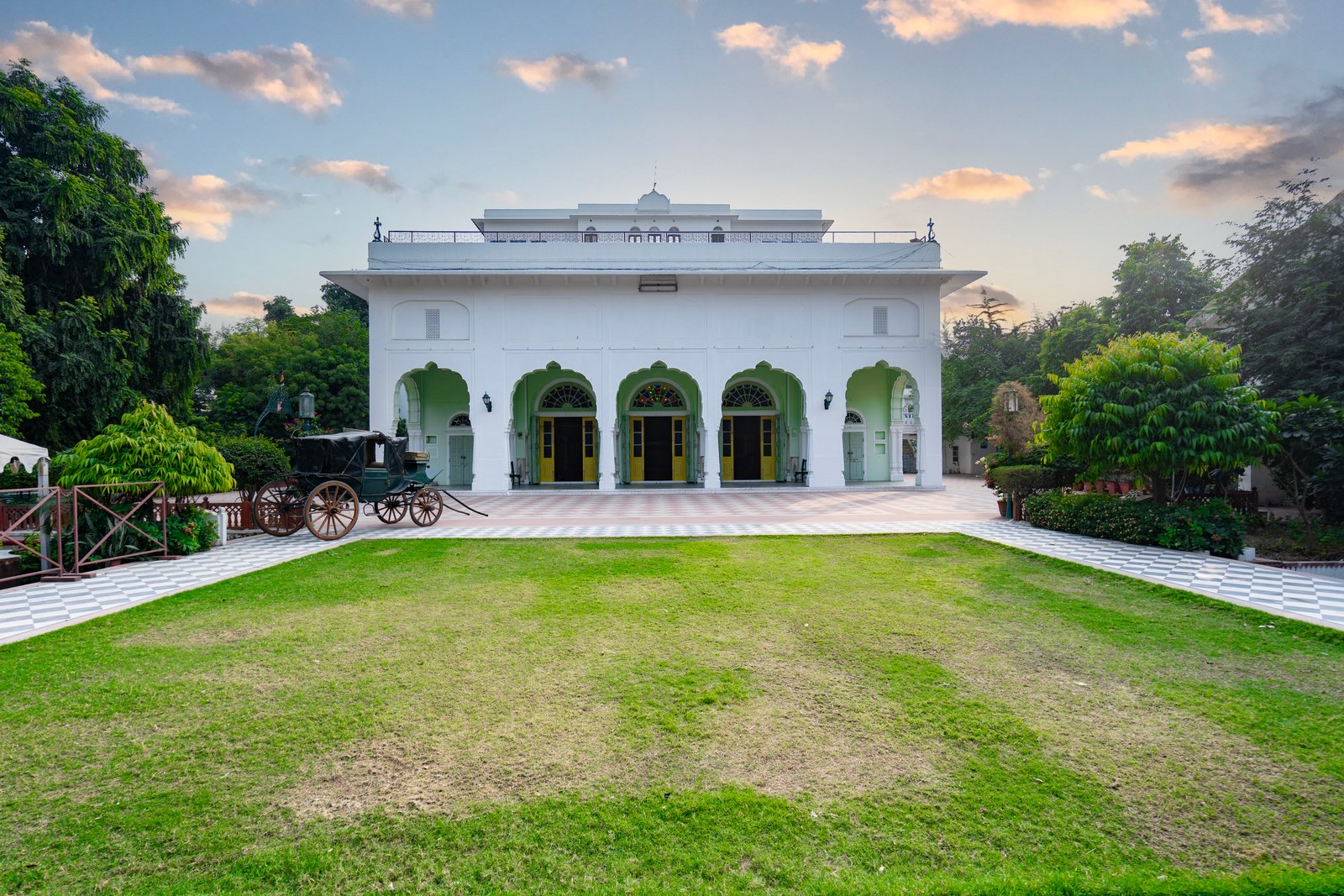
Every Kachhwaha chronicle begins in Ayodhya, and the House of Diggi is no exception.
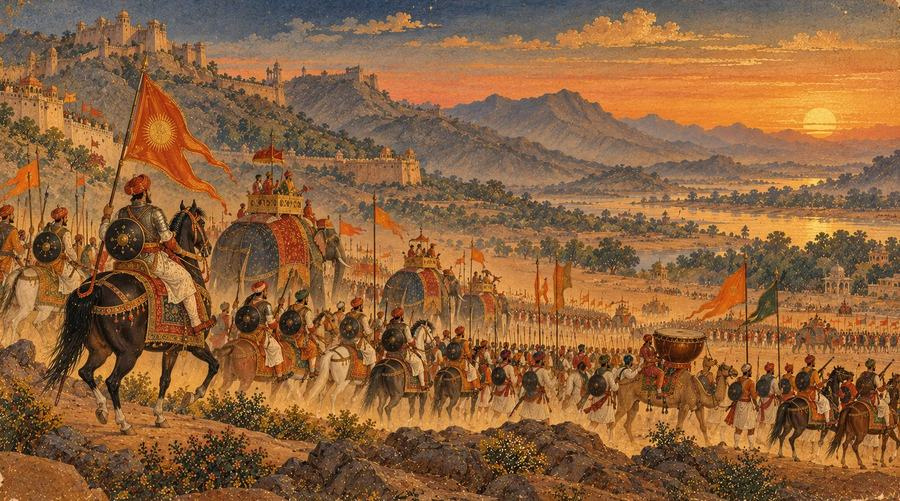
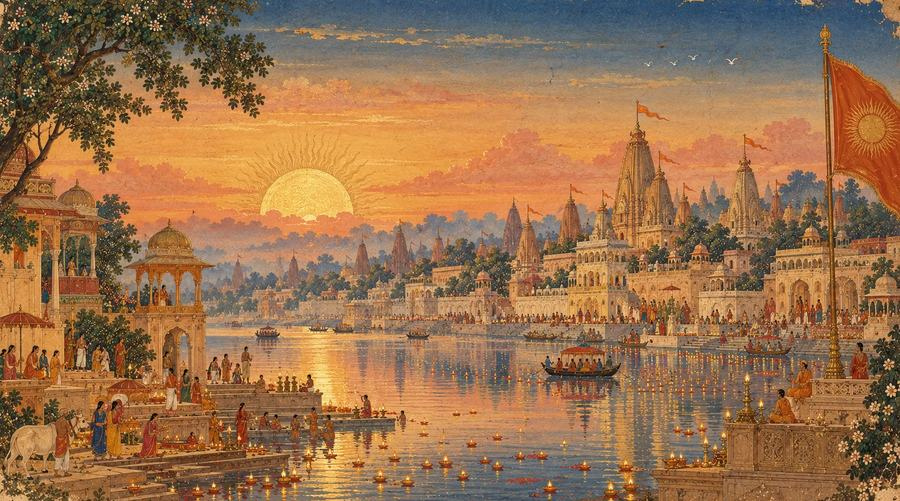
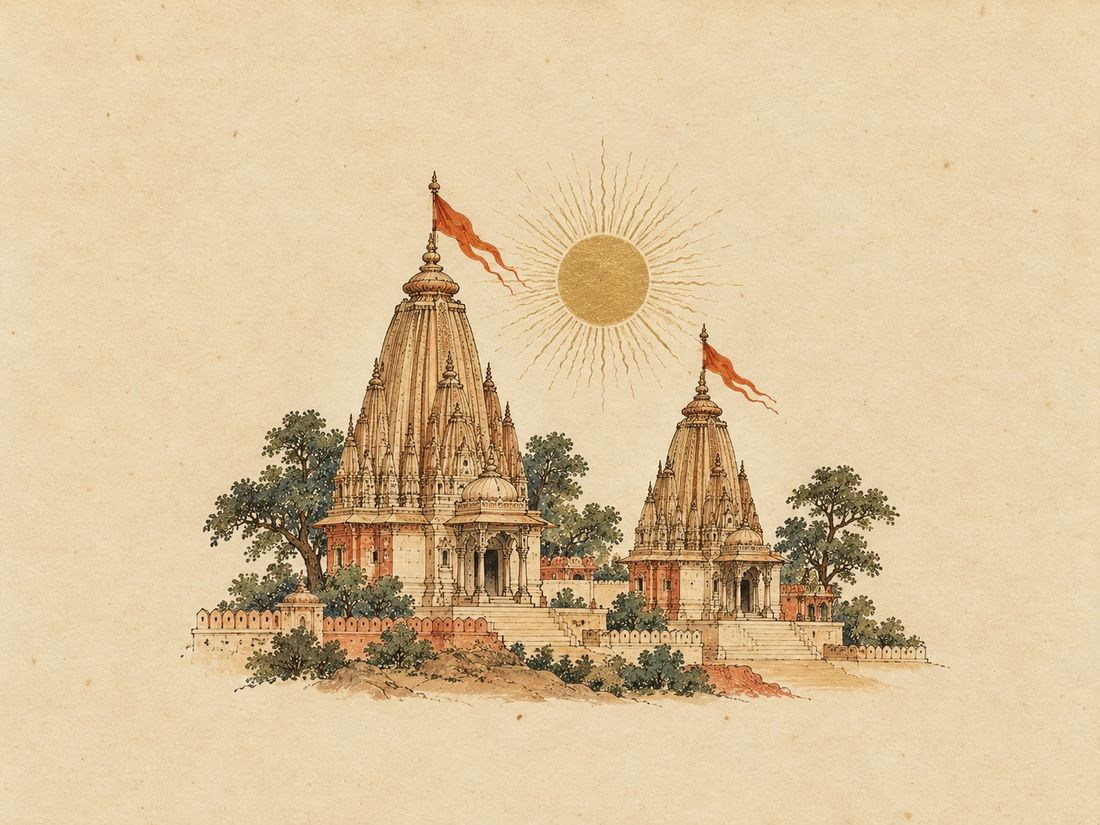
The Kachhwahas count themselves descendants of Kush, son of Lord Rama, and so of the Suryavansh, the dynasty of the Sun. Their ancient gotra is Manavya, after Manu himself. Their battle standard carried the Sun, and their war-cry, raised for centuries on the roads of Rajputana, was “Jai Sitaramji ki.”
The name has a history of its own. Eleventh- and twelfth-century inscriptions at Gwalior and Dubkund call the clan Kachchhapaghata. As the line moved west into Rajasthan the word softened into Kachhwaha, and in older verse into Kurma and Kushwaha.
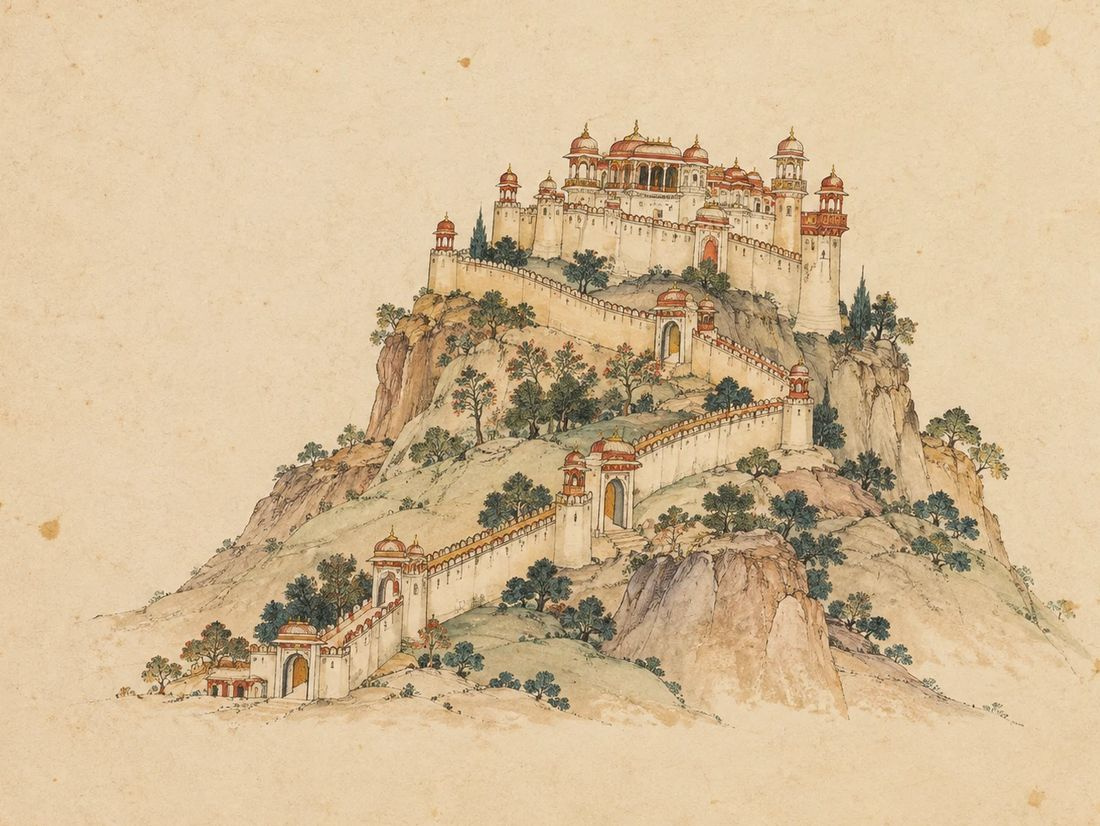
In the twelfth century Dulha Rai won Dausa, and his son Kakil took the hills of Amber from the Meena chiefs. A dynasty had found its capital. By 1503 it belonged to Maharaja Prithviraj, a man with nineteen sons. One of them would walk away from all of it.
photograph to come
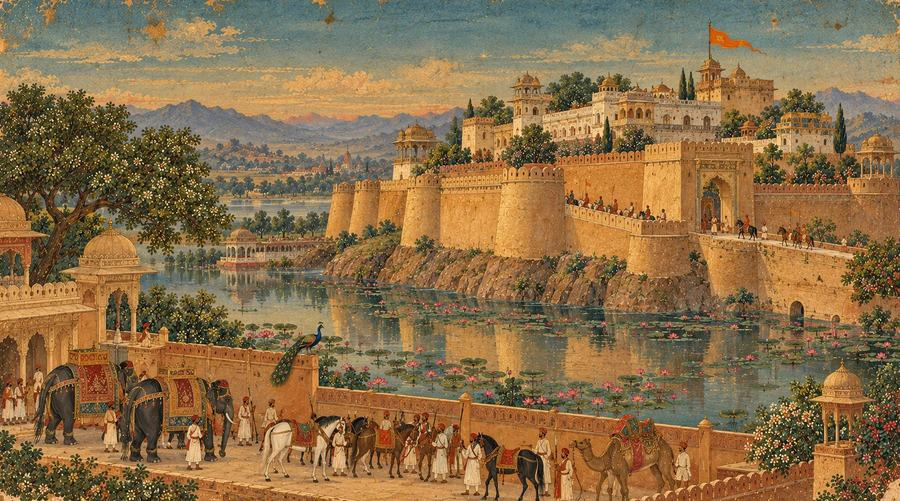
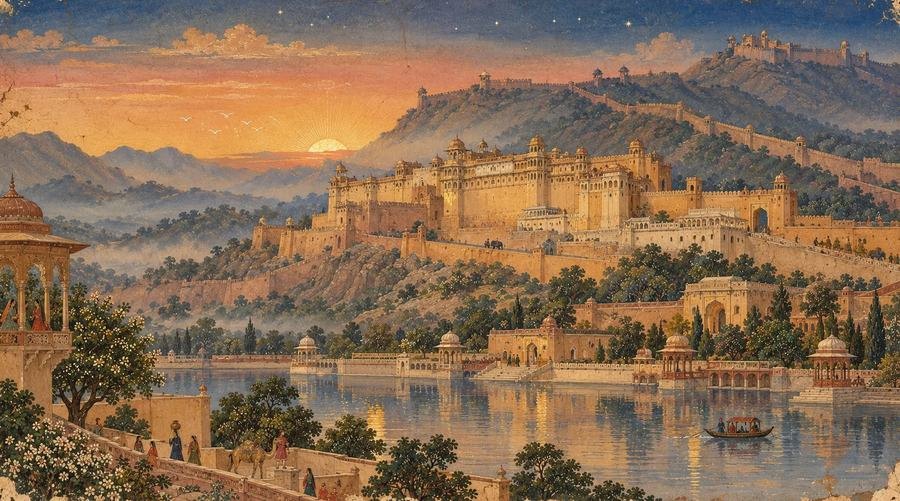
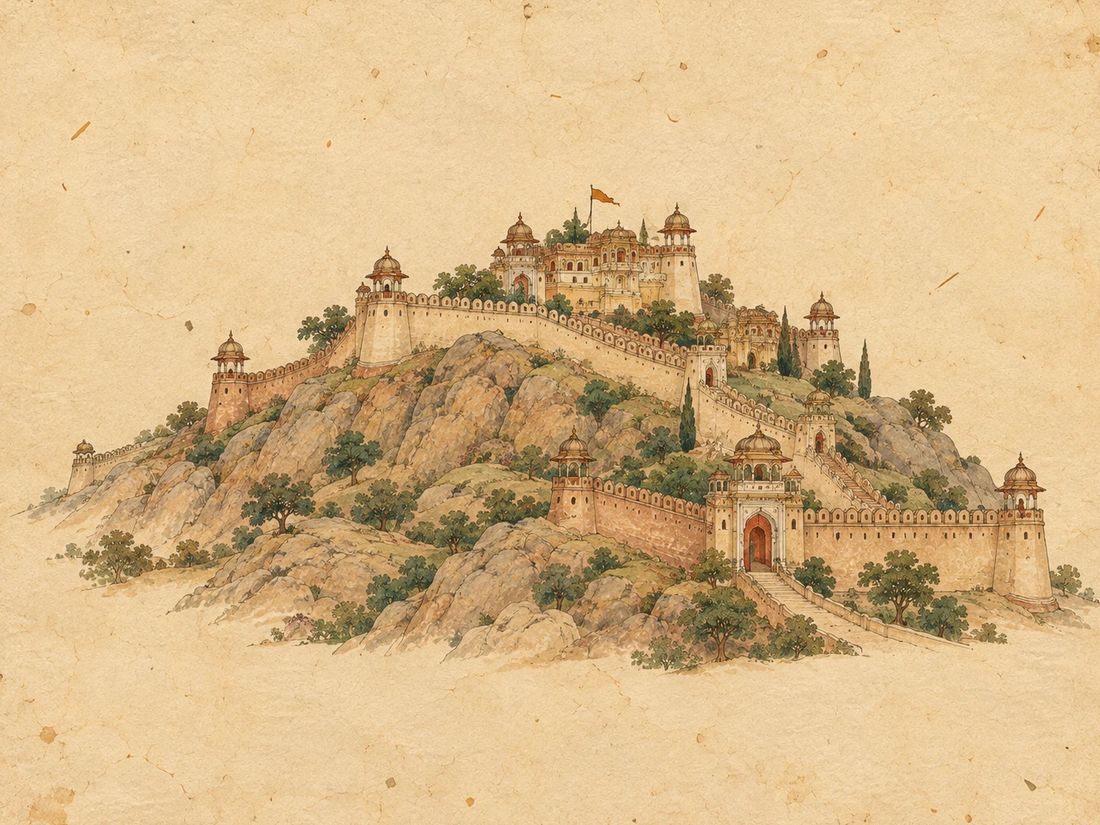
Amber PalaceThe Kachhwaha capital in the hills above Jaipur
The Hindi chronicle suggests kachchhapaghata means “victors over the Kachchhapas”, a serpent clan of the Gwalior country.
The image of Sitaramji rode to battle in a litter, beneath the standard of the Sun.
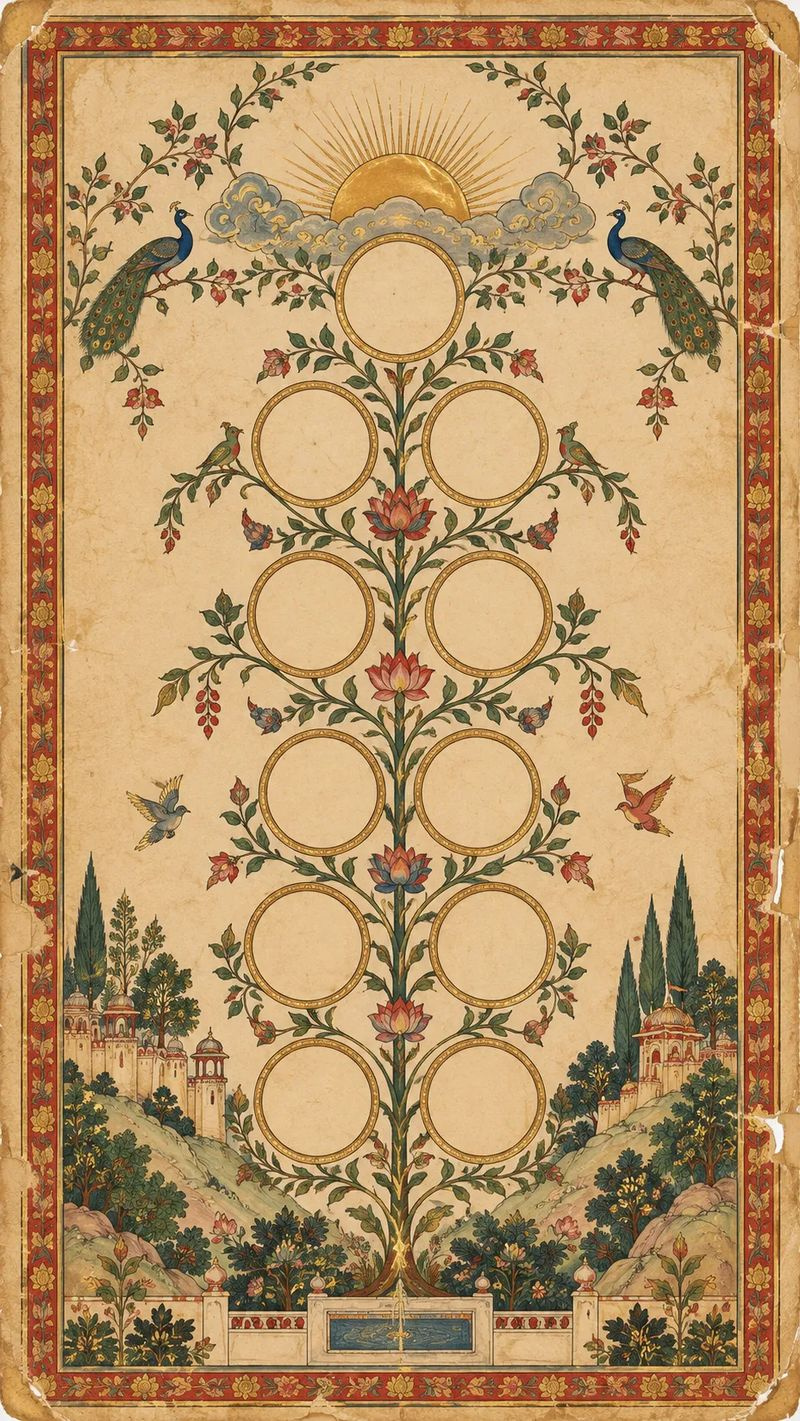
The royal line, from the Sun to Jaipurdrag or swipe →
The Solar Line
Ayodhya
Kush, son of Lord Rama, is the root of the clan. The Kachhwahas are of the Suryavansh, the dynasty of the Sun.
Kachchhapaghata
Gwalior
Hill-fort of Gopadri, raised, tradition says, by Suraj Pal. Inscriptions here call the clan Kachchhapaghata.
Tenth century
Narwar
Dhola ruled here, the hero of the old Dhola–Maru love ballad that Rajasthan still sings.
Twelfth century
Dausa
Dulha Rai won Dausa and planted the Kachhwaha flag in the land that would become Rajasthan.
Kakil
Amber
His son Kakil took the hills of Amber from the Meena chiefs and made it the capital.
1503 – 1527
Maharaja Prithviraj
Lord of Amber, father of nineteen sons. One of them, Jagmal, is where this chronicle turns.
29 Nov 1727
Jaipur
Sawai Jai Singh II lays the foundation of the Pink City. Diggi’s lords would serve its Maharajas for generations.
Chapter II · 1503 – c. 1549
The Knight Who Walked Away
जगमाल
The Sambhar countrySamvat 1584 · a father’s letter, a bard’s shelter
photograph to come
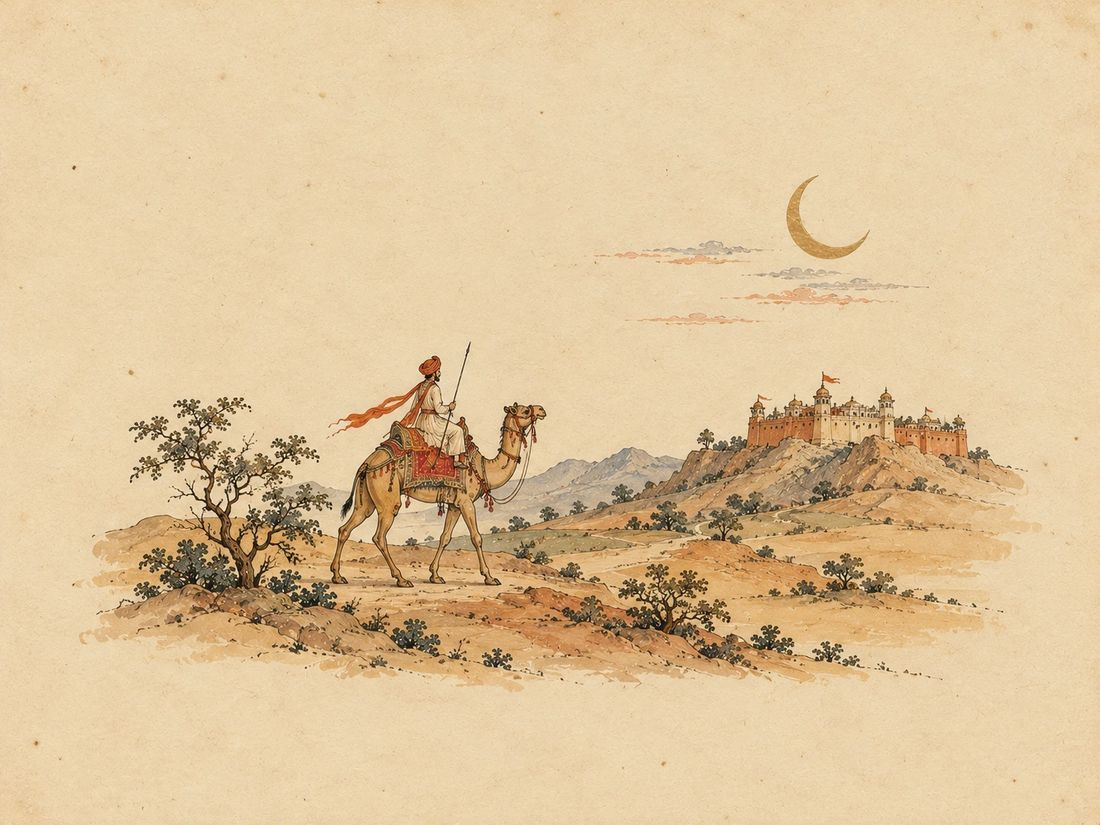
The road to SambharThe desert country Jagmal and his sons rode through
A charan’s word was sacred. Shelter given to a bard could not be taken back.
sons: Khangar, Ramchandra, Jaisi, Sanga and Sarangdeo, raised in Amarkot by their Sodha grandfather.
Sam. 1584 · Prithviraj dies. Jagmal reappears in Amber “like an apparition” and is welcomed home.
Sam. 1605 · He dies in the Sambhar country, still feuding. Family records differ on the year.
Folio II · 1503 – c. 1549
Jagmal was one of Prithviraj’s many sons (the family history counts him sixth of nineteen). The bards describe a man who loved wine, adventure and minstrelsy, a Rajput knight-errant. Amber gave him the village of Saiwad. It was too small for him.
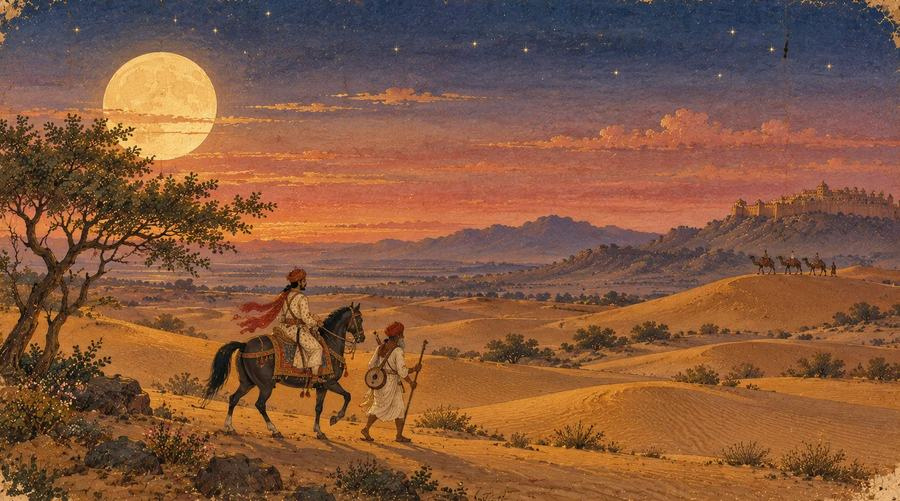
The quarrel that changed everything was over a bard. Prithviraj had banished the charans from Amber, but Jagmal gave one of them sanctuary, and in Rajput custom that shelter was sacred. His father’s answer was a letter forbidding him ever to show his face again. Jagmal obeyed. He gave away his small inheritance to the charans and priests, and rode out with the exiled bard as his only companion.
For seven years he wandered, served for a while as a freelance sword in Bikaner, and reached Amarkot in Sindh. There he married Neta Kunwar, daughter of the Sodha chief Pahar Singh, and five sons were born. Then the road called again. He left them in the desert and rode east.
By the time he reached Amber his father was dead and Babur had won at Panipat and Khanwa. The old world had ended, and it was a bold man’s opportunity. But another family quarrel followed, and Jagmal left a second time, for good, this time to the Sambhar country. His sons would come after him.
Of Raghu’s line was Prithviraj, Lord of Amber, and from him sprang Jagmal, fair as the god of love, in whose house the great Khangar was born.From the verses of the bards of Amber
Chapter III · 1554 – 1583
Khangar, the Sword‑Bearer
खंगार
Boraj to Bengalthe sons of Khangar ride for Akbar
Folio III · 1554 – 1583
The five sons grew up in Amarkot and, on hearing of their father’s death, rode to Amber and saluted their uncle, Raja Bharmal, as lord. Then they went to Sambhar to settle their father’s old feud. At Boraj two of them, Jaisi and Sanga, fell inside the castle, and Sarangdeo died beneath a banyan tree that bears his name to this day. The eldest, Khangar, won Boraj in 1554, Kalakh in 1555 and then Jobner, the oldest seat of the Khangarots.
His name is a clue. It is a variant of khadga, the sword, and means one who is expert with the blade. His descendants became the Khangarots, or Khangarwats: the sons of Khangar.
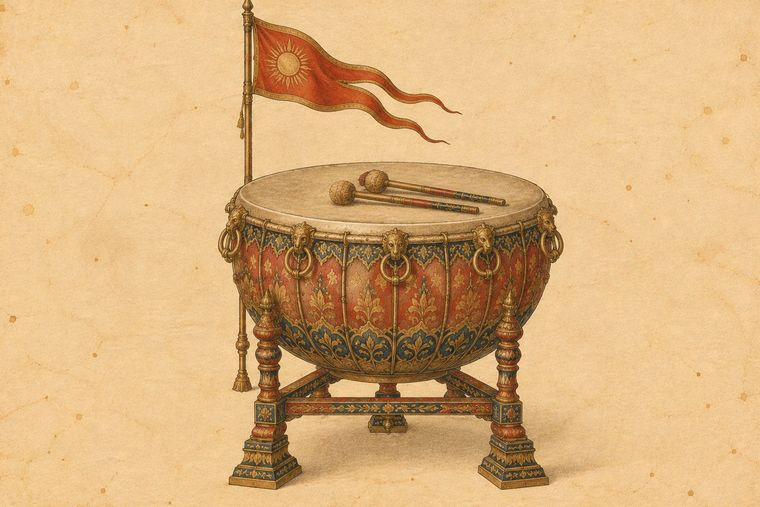
Bharmal’s star rose with Akbar’s, and Khangar rose with Bharmal. He was held hostage for a year by a hostile Mughal governor until Akbar himself forced his release at Sambhar in 1562. After that he served the throne he had once feared: turning back a rebel marching on Delhi, riding with Kunwar Man Singh to Haldighati in 1576, and, in 1577 at the siege of Bundi, seizing the enemy’s kettledrum and flag. Akbar let him keep them, and the family chronicle says the House of Diggi still holds these relics.
In 1583 he marched to Bengal with Gopal of Chomu, and fought at Sherpur-Murcha. He died soon after, in a feud near Mandalgarh. Akbar had made him a commander of 2,500 zat, 3,500 by tradition, and given him Naraina in jagir.
photograph to come
The kettledrum and flagRelics of Bundi, 1577, kept at Diggi
Boraj won, then Kalakh in 1555. Jobner follows.
Freed from captivity by Akbar at Sambhar.
Haldighati, with Kunwar Man Singh.
Bundi: the kettledrum and the Chaperi flag.
Bengal. Dies soon after, near Mandalgarh.
The Diggi vanshavali counts sixteen sons born to Khangar; the bards say thirteen.
13sons, say the bards
10founded their own thikanas
2500zat, his rank under Akbar
Naraina, Sali, Jobner, Maonda, Gudha, Sakhun, Mor, Salvada, Harmara, Khejri, Keria: these are names that electrify the blood of every Khangarwat, the chronicler writes. The sons spread across the Sambhar country and guarded the caravan routes of the salt trade. Then, for almost a century, the family stayed at home and let history pass it by. Until, around 1630, in a village called Tilorna, a boy was born who would not.
Chapter IV · c. 1630 – 1695
The Lion of Lamba
ठाकुर हरिसिंह खंगारोत
Thakur Harisingh Khangarwat, founder of the Harisinghots, in the words of his chronicler a man born too late for the minstrels.
Thakur Harisingh KhangarwatTilorna
A boy of the Khangarot house
Thakur Harisingh was born around 1630 in Tilorna, a village of the Khangarots. His line ran from Khangar through Bhakar Singh of Sakhun, Dwarkadas of Tilorna and his own father, Ajab Singh. An elder brother, Vijay Singh, would one day found Diggi.
The Qanungo chronicle says he was born a little too late for the bards and a little too early for the historians. The family papers of Diggi are why we know him at all.
A young mansabdar
On 31 July 1660 he received his first rank in the imperial service: 150 zat, on a patron’s recommendation. He was posted to the province of Kabul and fought the Yusufzai tribes of the Peshawar border under Shamsher Khan, and his rank rose to 300.
In 1677, tired of a rank that would not move, he rode home to Rajasthan.
The knight of Lamba
Malpura was lawless. Its people, Hindu and Muslim alike, begged him for protection, and he drove out the bandit chief Pratap Singh Panwar. When Durgadas Rathore of Marwar raided the district in 1680, Harisingh met him in the field. The two men remained friends all their lives, and their letters survive.
He strengthened the garhi of Lamba. It became the first seat of the Harisinghots, the branch of the Khangarots that he founded.
Guardian of a boy-king
Maharaja Ram Singh was posted to the Khyber Road and summoned Harisingh to be ataliq, guardian and deputy, to his grandson Kunwar Bishan Singh, who was about ten. Harisingh left Malpura to his sons Gaj Singh and Amar Singh and rode north.
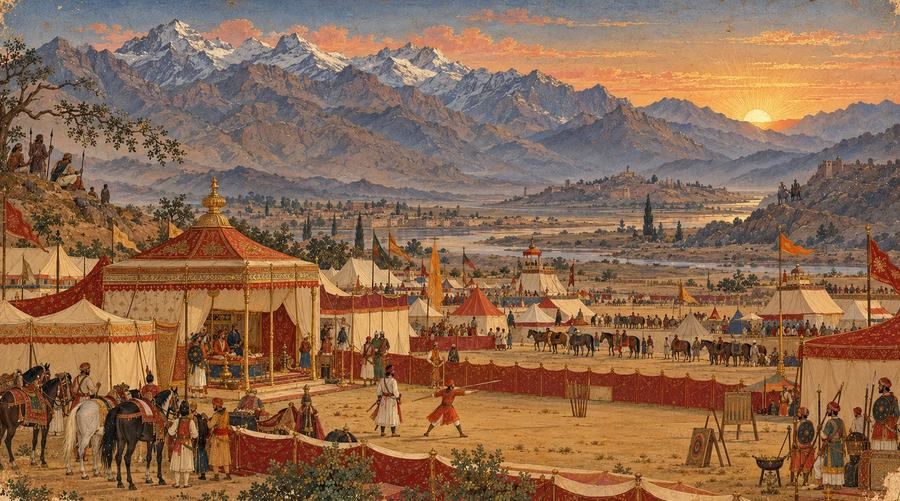
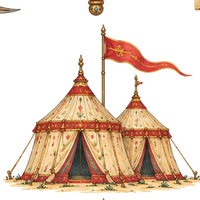
Outside Jalalabad his men raised a miniature Amber of canvas, with an inner courtyard, a diwan-khana, a guard-room, stables, an archery ground and a gymnasium. The prince rose early, prayed to Sitaramji with his beads, read the Gulistan with a Persian tutor and practised the javelin. Harisingh slept in snatches at the guard-house and made his rounds by night. On that frontier, the saying went, you scatter silver and spare the bullets.
Wronged, he rode back
Court intrigue over Malpura estranged him from the old Maharaja. In 1685 he took a passport and crossed the Indus at Ohind. In 1686 he was recalled and gave Ram Singh the advice that saved the prince. When Aurangzeb ordered Bishan Singh south, away from his grandfather, Harisingh argued for delay and diplomacy and won it, at the cost of the prince’s rank.
In 1687 the Maharaja dismissed him and seized the Khangarot estates. In early 1688, with Ram Singh dying at Kohat, Harisingh rode back to take charge. Ram Singh died that April, and on 30 April 1688 the sixteen-year-old Bishan Singh was saluted as Raja, with a kettledrum and 2,500 zat.
The Peshwa of Amber
The emperor sent the Kachhwahas against the Jat risings around Mathura and Agra and gave them six months, a task the chronicler says could not be done in six years. Harisingh, now commander-in-chief of the Amber army and the Raja’s chief minister, escorted convoys to Sonkh and Sinsini, held the imperial highway and took fort after fort. In 1691–92 he won Abair and Sogor.
Twice he refused a mansab of 500 zat. He wanted only the jagir of his home country, Malpura. Meanwhile he invited Kachhwaha kinsmen to settle in Mathura and Koel, the first Kachhwaha expansion beyond Amber’s hills.
The last siege
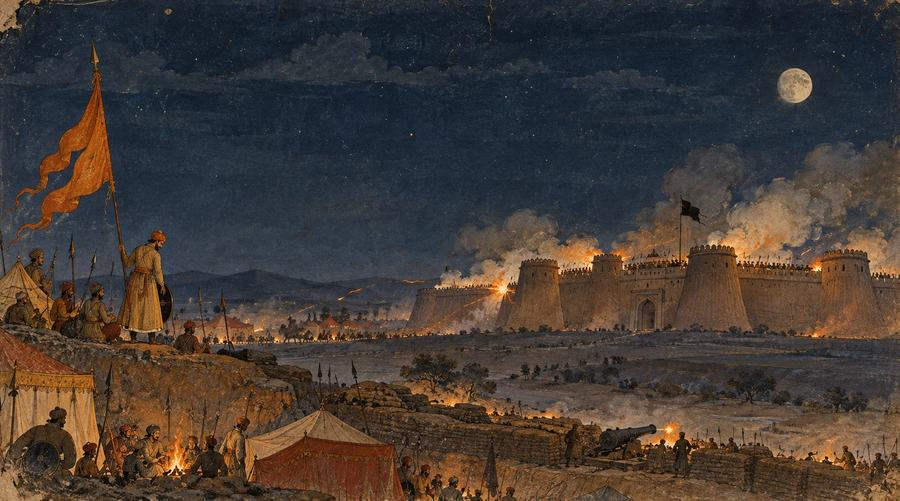
In December 1694 he crossed the Jamuna to take the fort of Jawar from Nanda Jat. It was a famine year, and he first built a fortified depot to feed his army and then cleared every outlying garhi. On 17 March his aged mother died in the camp. He mourned for a day and went back to the trenches.
On 5 April 1695, riding at the front of an attack, he was struck down by a shell from the fort.
He was carried to his tent and his wounds were dressed. When he woke, the chronicle says, he thought of neither wives nor children, only of his comrades-in-arms in the trench. He gave his last message to them, and was gone.
When the news reached the imperial court on 26 April 1695, a few men wept honestly. One was a Mughal nobleman, Mirza Yar Ali Beg, who said that Harisingh had thrown away his life for his master and for the emperor.
Qanungo’s verdict is that Harisingh was the greatest soldier and statesman the Kachhwahas produced between the two Jai Singhs, and that he found his Raja a third-rate chief and left him looked upon as the king of Hindustan. The army he trained and the administration he built became the machine with which Sawai Jai Singh II raised Amber to premier rank.
photograph to come
Thakur Harisingh KhangarwatPortrait or painting, from the family archive
If great amirs should have a servant, they should have one like Harisinghji, so brave and loyal, and so indifferent to his own loss and gain.Mirza Yar Ali Beg, on hearing the news at court
Chapter VI · from 1683
A Town Called Diggi
डिग्गी
photograph to come
The Raola of DiggiThe fort-palace of the Thakurs
photograph to come
Shri Kalyaniji, DiggiThe goddess of the town
Folio VI · The grant of 1683
While Harisingh was fighting at the other end of India, his elder brother Vijay Singh held the family’s lands at home. The Naruka zamindars of the village of Diggi had joined the bandit chief Pratap Singh Panwar and thrown the whole of Malpura into turmoil. The brothers drove them out. As a reward, Prince Muhammad Azam granted Vijay Singh the zamindari of Diggi and twenty-one other villages, among them Malikpur and Rupawali, and in 1683 the grant was confirmed. The House of Diggi was born.
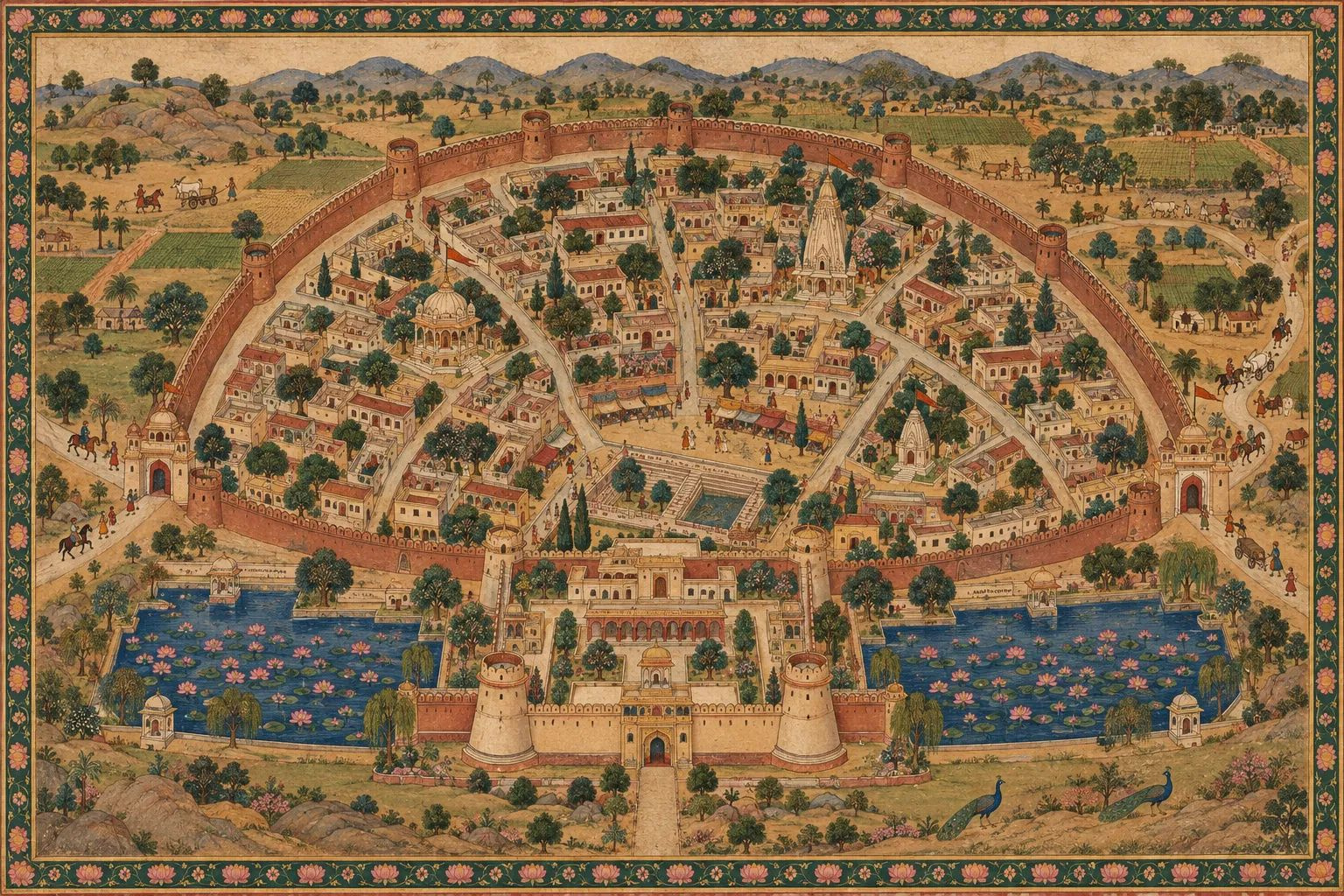
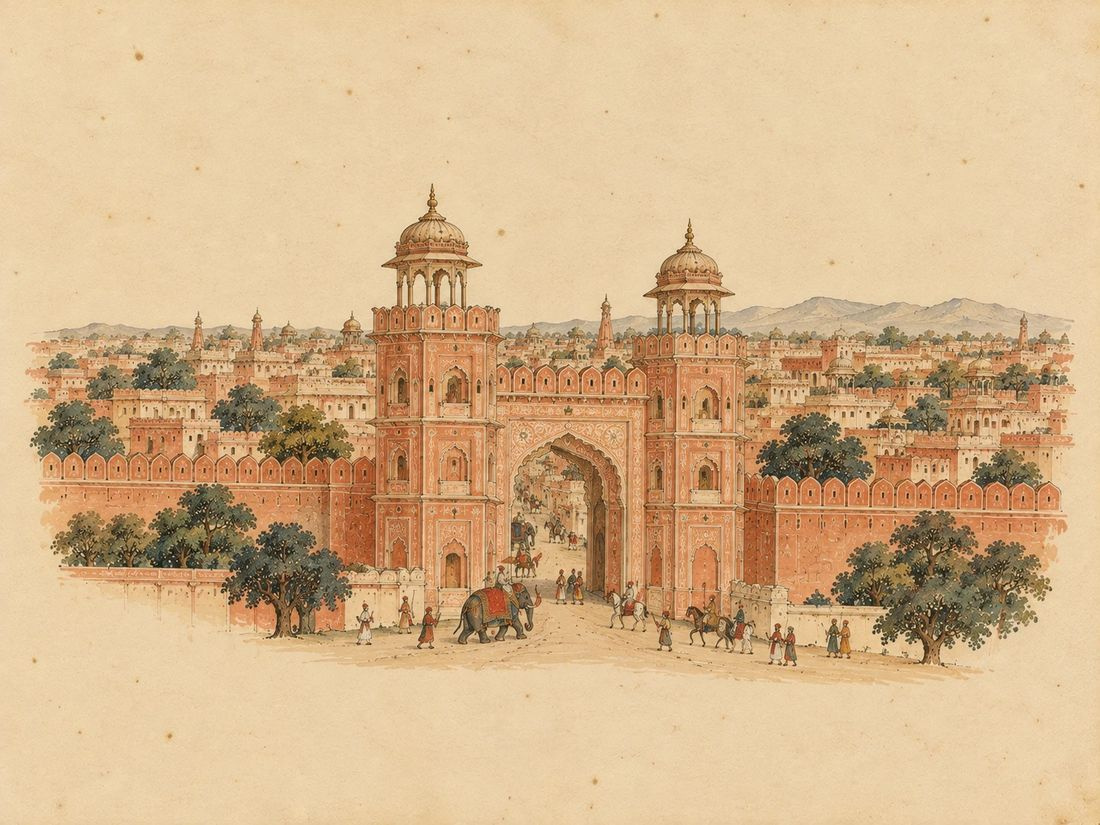
Diggi was then little more than a village. Today it is a walled, fan-shaped town with a brick wall in a half-circle and two gates, the Dhauli Gate on the east and the Malpura Gate on the west. Its citadel, the Raola, stands at one end. Over the years the Thakurs and their Thakuranis turned it into a town of temples: warlike Sitaramji, patron of all the Kachhwahas, Krishna as Natvarji and the old and beloved goddess Shri Kalyani, whom the whole region calls simply Shriji.
Diggi, an illustration: the half-circle wall, two gates, and the Raola between its lakes
A legend
The King Who Gave Diggi Its Name
As the people of Diggi tell it, in the far past there was a powerful king, Raja Digvai, who ruled at Chandsain. One day he chased a swift mare until nightfall, and at the end of the chase found a woman of impossible beauty, a heavenly maiden of Indra’s court. He took her to his palace and kept her until he was forced to give her back. As she left, she cursed him with leprosy.
The penitent king dreamed that he must bring the hidden image of the goddess Shri Kalyani and set it down where the axle of his cart broke. It broke at the place now called Diggi. There he built a temple of twelve pillars. He was cured by bathing in the water of the goddess’s ablutions, and a town grew up around her. So they say, the town takes its name from Raja Digvai.
Pilgrims came from across Rajputana to Shri Kalyani, and the Thakurs fed them from a free kitchen and housed them in nine dharamshalas. Whatever one makes of the legend, the town’s devotion is plain in the record: everything at Diggi, people say, is through the grace of Sitaramji.
Chapter VII · The Citadel
The Raola and the Armoury
रावला
Diggibetween two lakes, a fort built on the plan of Amber
Folio VII · The citadel
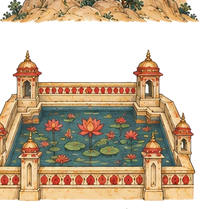
The historian who visited Diggi in the last years of the old order compared the Raola to a medieval castle softened by something of Elizabethan comfort. It stands at one end of the town, bordered by two sheets of water that fill to the brim in the rains and are carpeted with pink and white lotus.
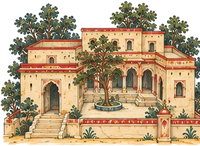
Its plan, he wrote, is a miniature of the Amber Palace. From outside it is restrained. Inside, it is an ingenious arrangement of spiral defence towers, and the staircase has no flights of steps, only a gentle zig-zag ascent for a rider or a palanquin. The Diggi Palace of Jaipur, he notes, was built on the same Amber plan.
Beside the Raola was a large quadrangle that served as stable for horses, elephants and camels. A risala of twenty-five horses and a line of elephants were always kept ready, and by long custom, whenever the Maharaja of Jaipur visited the castle, Diggi offered him an elephant and two horses as nazar. A horse born and bred in the Thikana was the most prized gift of all.
It was Thakur Pratap Singh who gave the castle its last feudal flourish, a moat and a curtain wall, and the Thakur in charge of the armoury could still, the historian recalls, demonstrate every weapon in it.
photograph to come
Inside the RaolaCourtyards and the Amber-plan ascent
Mares were sent to Kishangarh to improve the Diggi breed.
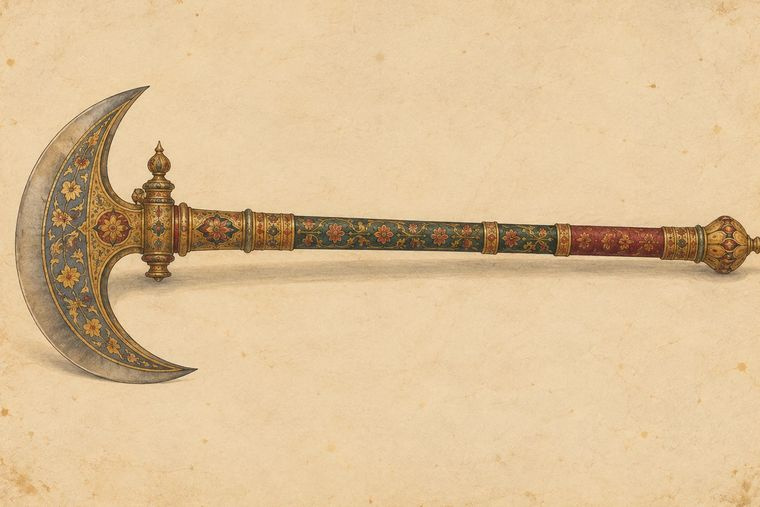
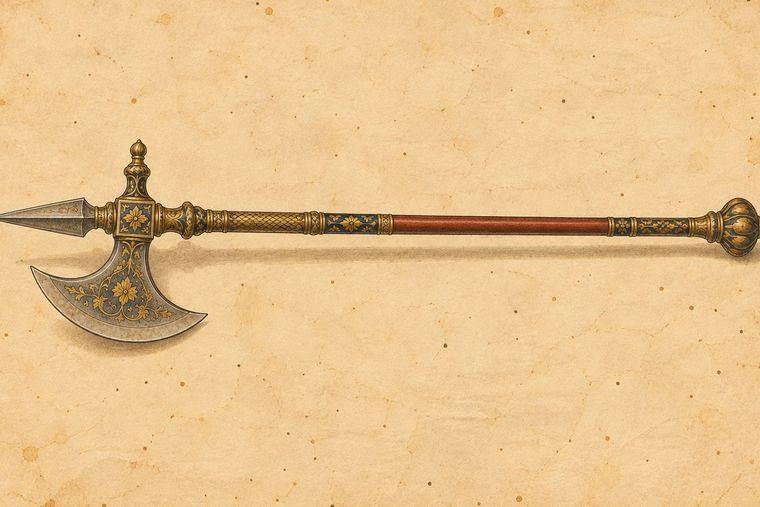
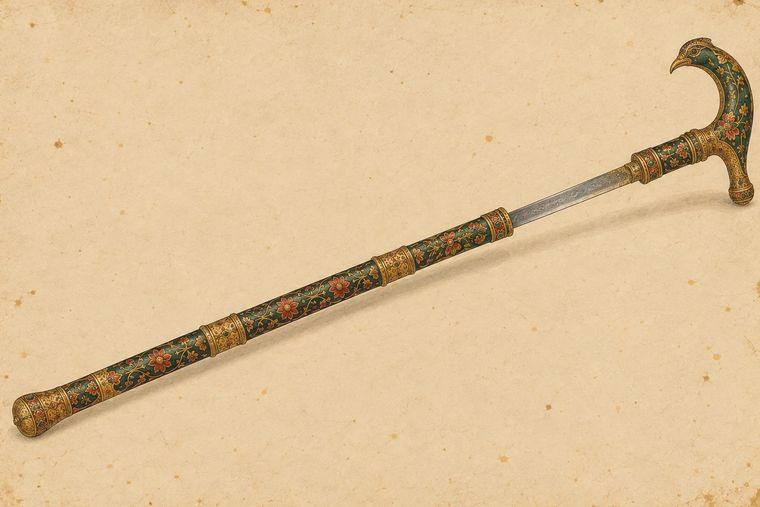
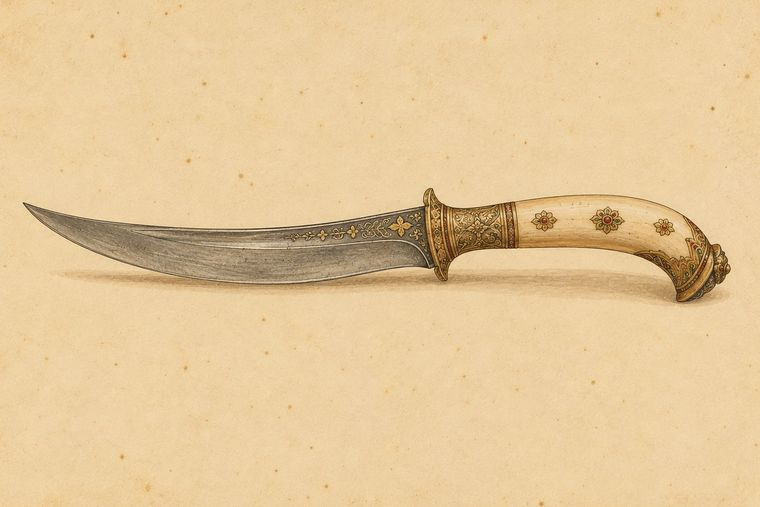
The armoury, catalogued
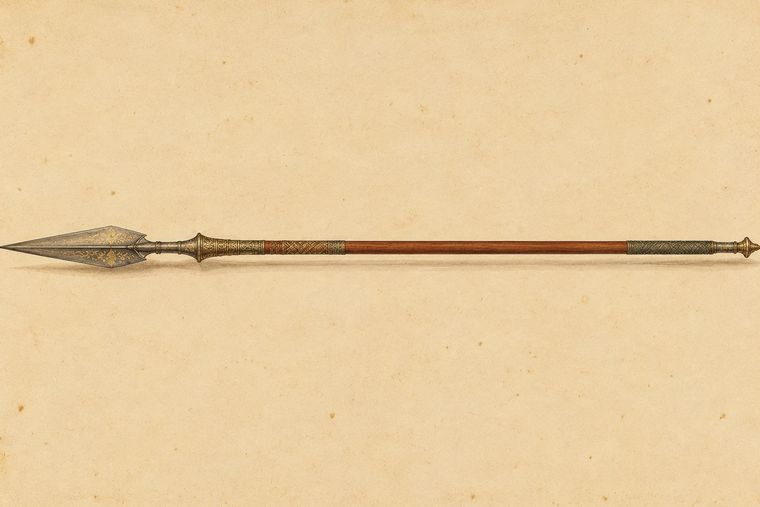
Naiza & Bhala
Lances and spears, the long weapons of the Rajput cavalry.
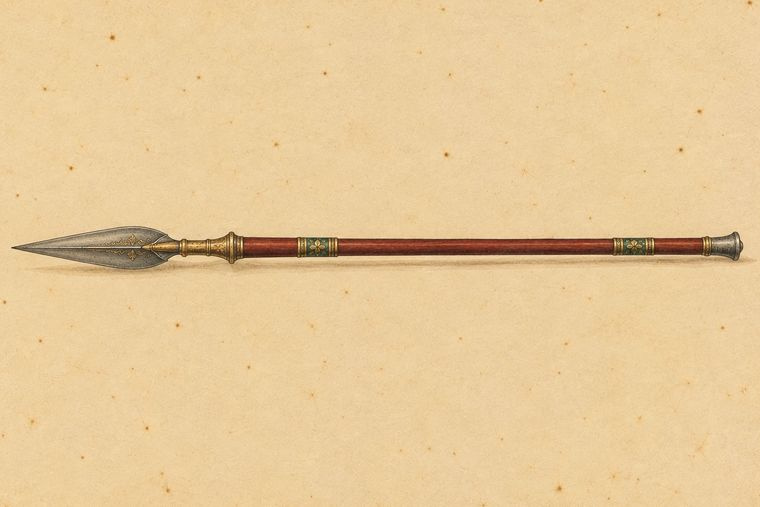
Barchah
The javelin, thrown from the saddle or on foot.
Sang
A broad war-axe with a heavy, curved blade.
Shaspar
A double-edged axe with one flat blade and one pointed.
Asa-gupti
A sword hidden inside a walking stick.
Gamchi
A knife for close work.
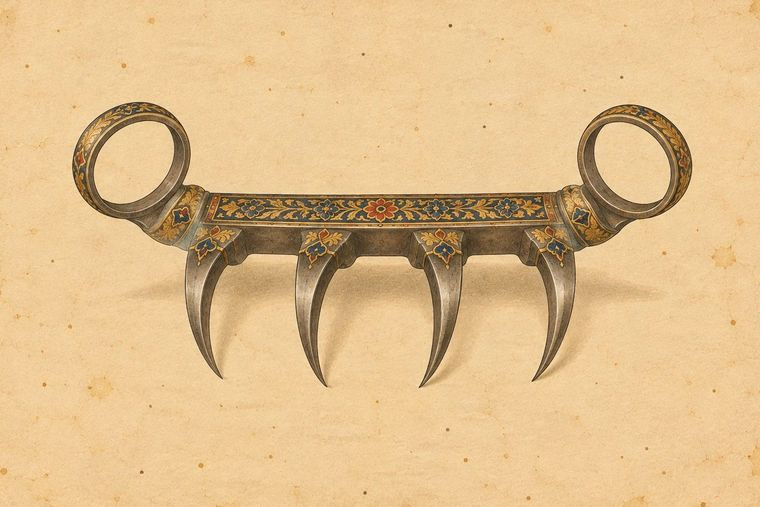
Wagh-nakha
The Maratha tiger-claws, worn hidden in the palm.
Naggara & Chaperi
The kettledrum and flag won from Duda of Bundi in 1577, which the book says Diggi still holds.
Chapter VIII · 1683 – today
The Lords of Diggi
डिग्गी के ठाकुर · वंशावली
Twelve lords in twelve generations, from the first Thakur to the last of the old order.
The vanshavali, rising from the Sun. Portraits to be added.
Thakur Vijay Singh
First Lord of Diggi
Elder brother of Harisingh. He won Diggi and twenty-one other villages from the rebel Narukas, and Prince Azam confirmed the zamindari in 1683. He held the family estates while Harisingh fought far away, and outlived him by several years.
Thakur Jagat Singh
Grandson of the Lion of Lamba
He served Sawai Jai Singh and his sons. When Maharaja Madho Singh asked for the key of Lamba’s fort, he handed it over, bade farewell to the home of his ancestors and moved to Diggi. Childless, he adopted Kalyan Singh, a great-grandson of Vijay Singh.
Thakur Kalyan Singh
The restless heir
After a quarrel with the Maharaja he went to Udaipur, where the Maharana gave him a jagir. Jaipur missed him and called him home. He built a gate and several chauks at Diggi.
Thakur Sardul Singh
The siege of Kalakh
Sent to subdue the defiant castle of Kalakh in 1793, he besieged it for almost a year and earned a robe of honour from the Darbar. He built a mahal and a stepwell at Diggi.
Thakur Karan Singh
A well, a chhatri
He dug the well still remembered as Karnotji-wala and lived mostly in Jaipur. His chhatri stands on the plain of Purwan ki Talai.
Thakur Megh Singh
The peacemaker of Pushkar
Saluted as Thakur at fourteen. At Pushkar in 1804, with Jaipur and Jodhpur encamped in hostile array, he and a Jodhpur noble talked their kings into meeting. He built the palace on the site of Chhah-chauk, a baradari in Jaipur (now within Ram Niwas Garden), and the Megh Sagar tanks.
Thakur Bhim Singh
The age of the law-suit
The rule of the sword had ended. He fought a long case over Malpura’s bhum dues and won it on 16 August 1864. His Rathore wife founded the Natvarji temple, and he built the zanana mahal of the Raola.
Thakur Pratap Singh
Builder and benefactor
He raised new villages, dug tanks at five of them, built a palace and laid out a garden in Jaipur, and gave Diggi’s castle its moat and curtain wall.
Thakur Devi Singh
A new generation
Adopted from the Khangarot house of Mundia, he built the large Kumar-pada mahal at Diggi.
Thakur Amar Singh
The tiger-hunter
He settled the village of Amarpura, built a dharamshala outside the gate of Shri Kalyanji and a three-storey hunting tower at Saindhaula. He died young and without an heir.
Thakur Sahib Sangram Singh
Statesman of the Darbar
Chosen from four candidates by the ladies of the Raola and Maharaja Madho Singh II. He served on the State Council and the Privy Council of Jaipur, opened free schools at Diggi, Morla, Datob and Rajpura, gave up hunting and founded the Shri Sitaram Trust in 1941.
Thakur Sahib Narain Singh
Soldier, reformer, legislator
A Captain of the Rajendra Hazari Guards and ADC to Sawai Man Singh II, he served three terms in the Rajasthan Assembly, worked to end death-feasts among the Khangarots and built the Sitaramji temple in Diggi’s fort.
The House Continues
Diggi Palace, Jaipur
Thakur Sahib Shri Ashok Kumar Singhji leads the family today, with his brother Shri Ram Pratap Singhji, who looks after Diggi Palace. Their sons, the young Kunwars, belong to the next chapter.
1683the year Diggi was granted
22villages in the first zamindari
12lords of Diggi in this chronicle
photograph to come
Thakur Sahib Sangram Singh1887 – 1962 · Chief of Diggi 1918 – 1952
photograph to come
Thakur Sahib Narain Singh1919 – 1996 · Chief of Diggi 1952 – 1996
Chapter IX · The Palace in Jaipur
A Living Heritage
जीवित विरासत
From the fortress at Diggi to a courtyard in the heart of Jaipur.
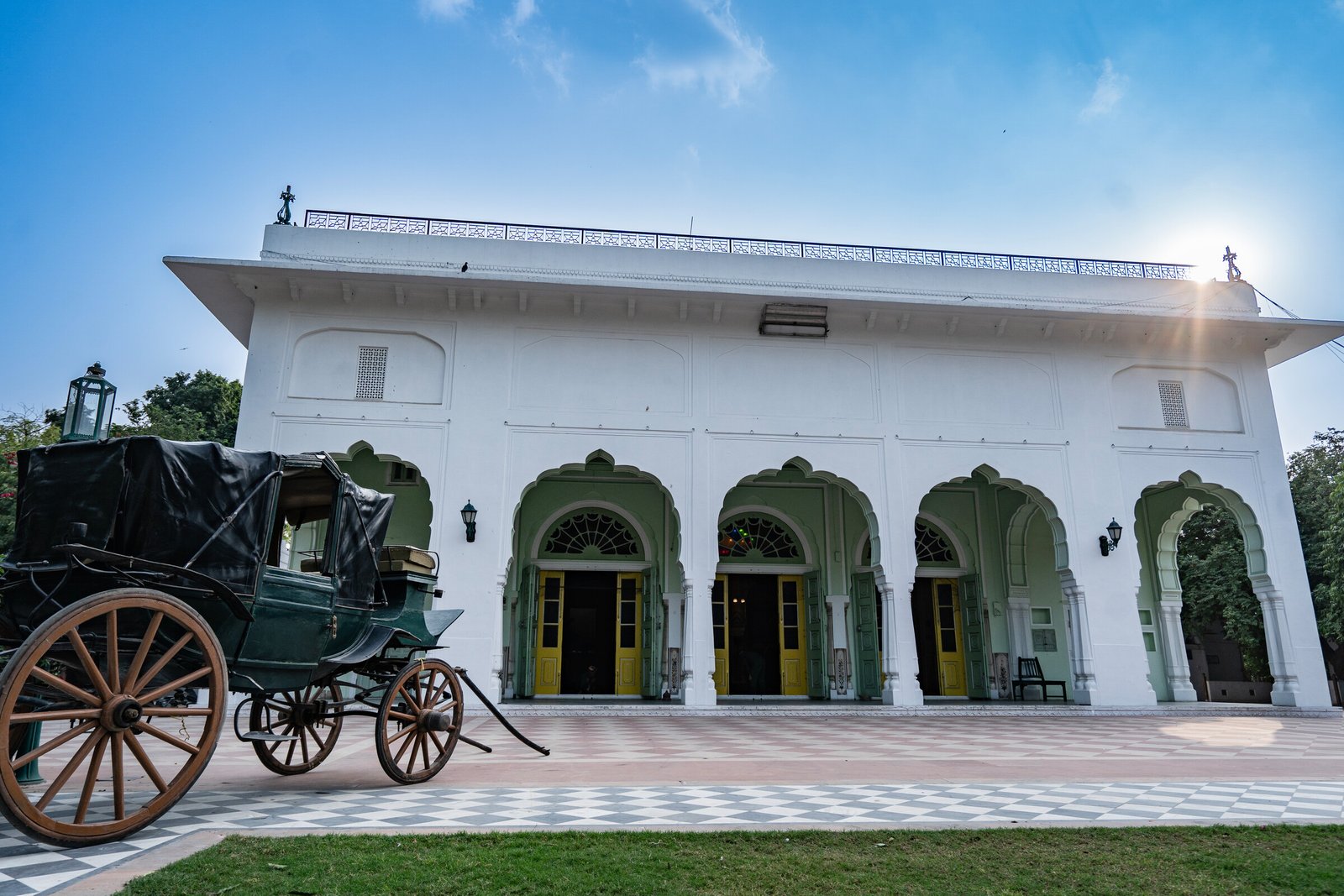
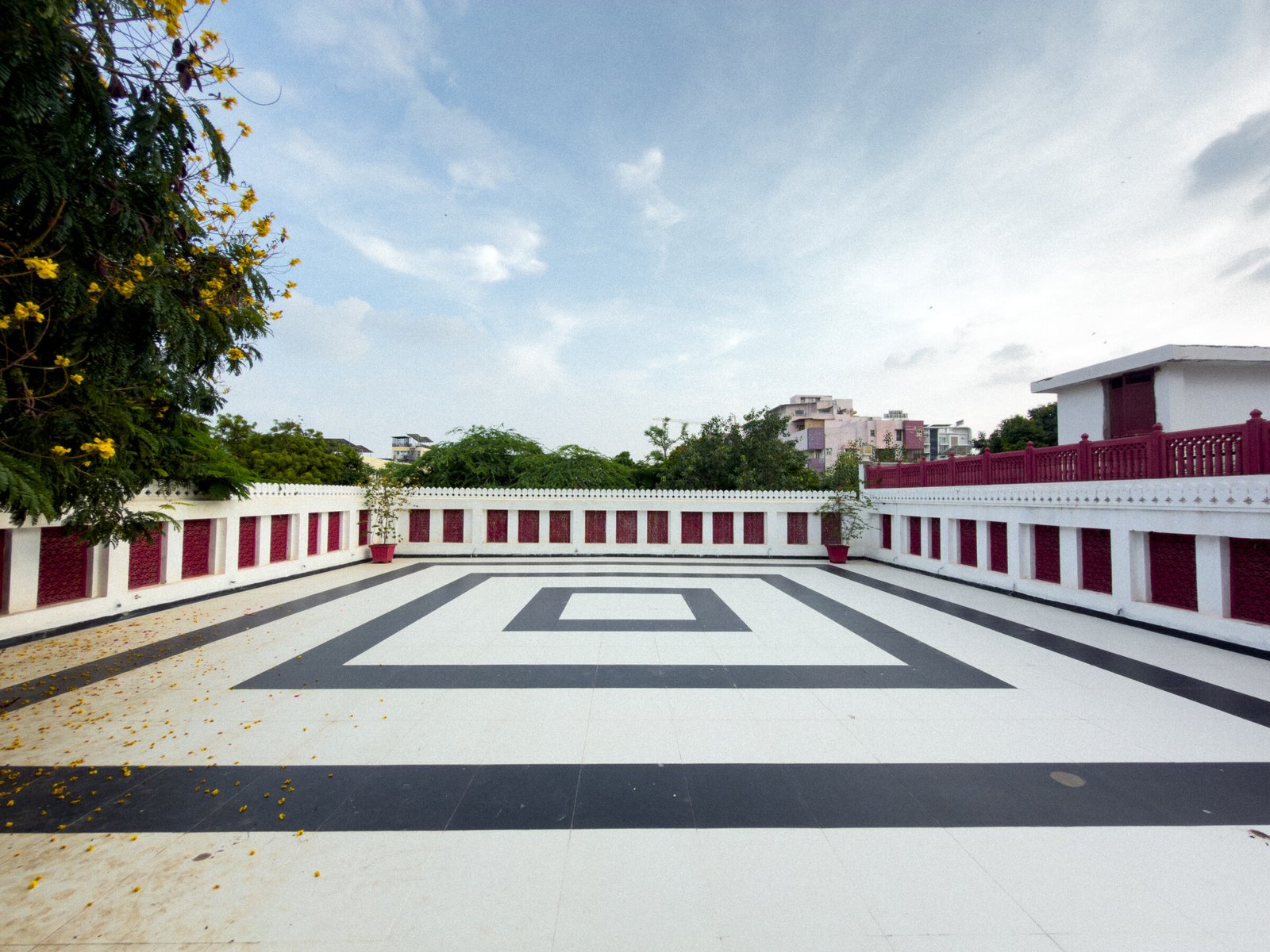
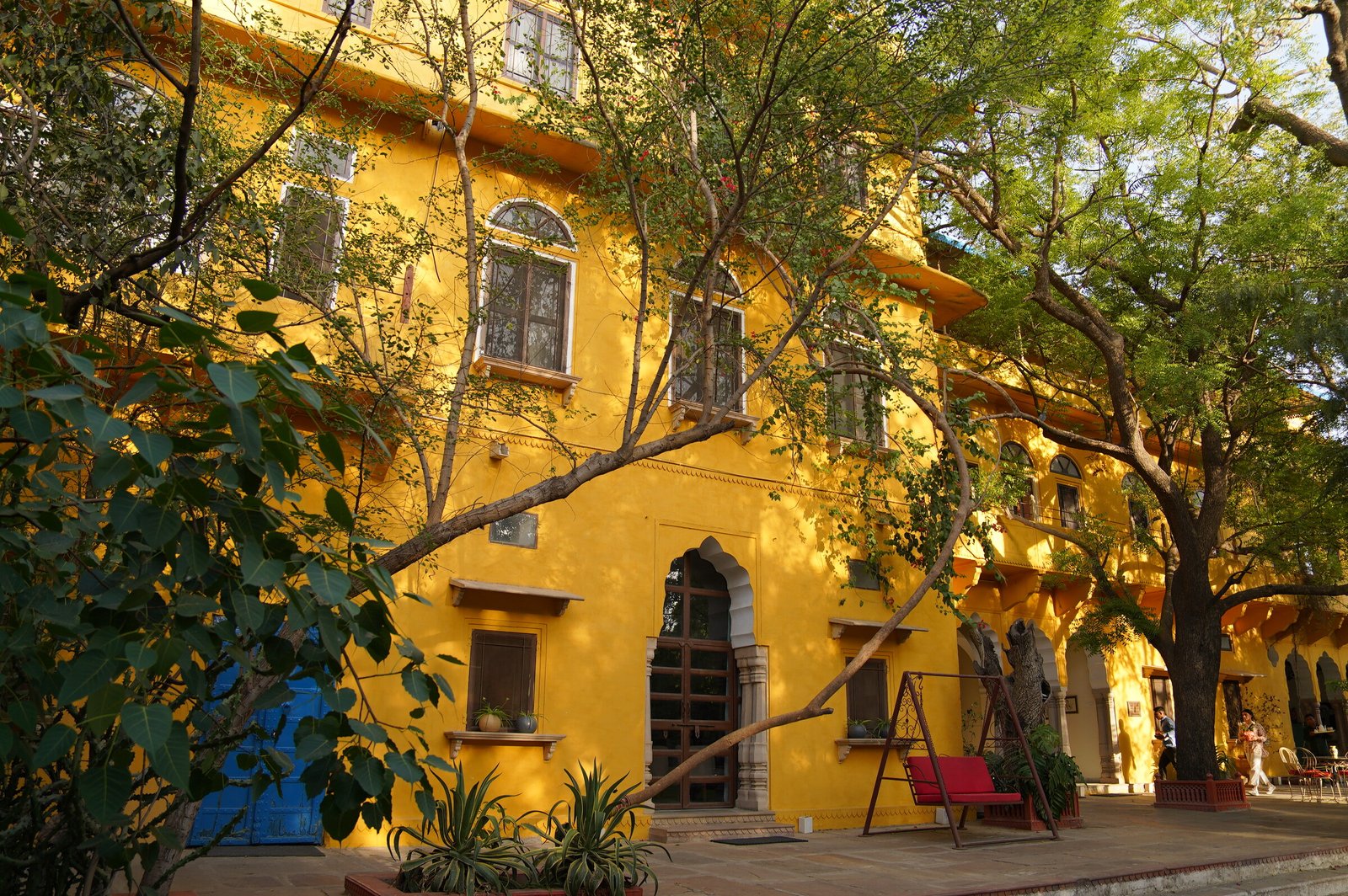
The Thakurs of Diggi were men of the Darbar as much as of the countryside, and they kept houses in the capital. The chronicle records a baradari raised in Jaipur by Thakur Megh Singh, later absorbed into Ram Niwas Garden, and a palace and garden built in the city by Thakur Pratap Singh in the nineteenth century. It is this Jaipur home that today is Diggi Palace.
In 1991 the family opened its doors and made the palace a heritage hotel. The 1997 edition of the family’s history notes that Shri Ram Pratap Singhji, the younger son of Thakur Narain Singhji, devotes his time to his farm and to Diggi Palace Hotel. What a guest finds there is the oldest Rajput idea: that a visitor under your roof is yours to protect.
To walk through the courtyards today is to walk through a house that has lived a long time. Its builders carried the Sun on their standard, kept faith with a prince, and made a home of the places they defended.
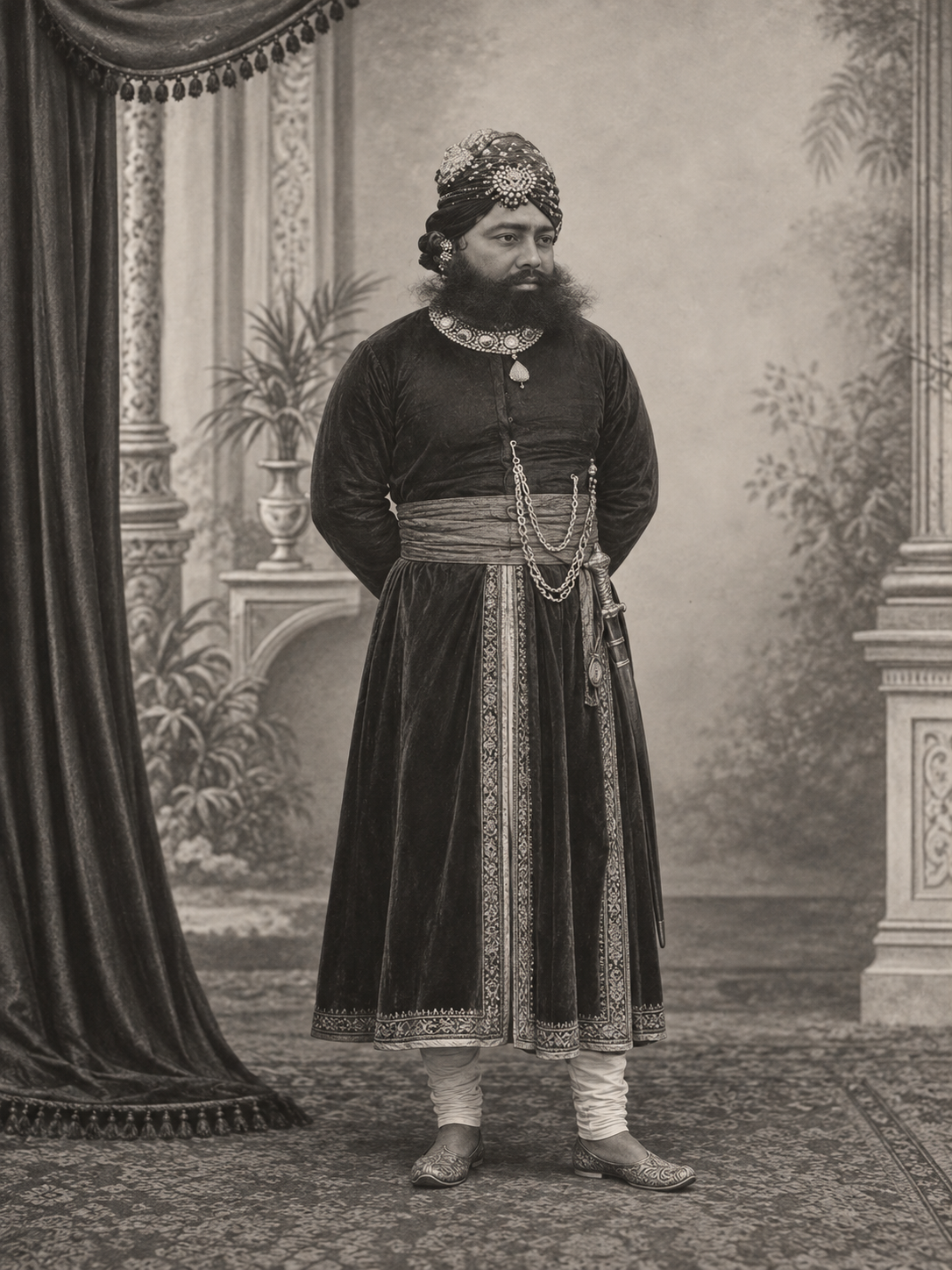
From the family archiveA portrait of the old order
History of the House of Diggi by Prof. K. R. Qanungo, edited and annotated by Dr. Shyam Singh Ratnawat, with a foreword by Gopal Narayan Bahura (1997). Written from the archives of the Thikana of Diggi and published with the blessing of the late Thakur Sahib Narain Singhji.
Kshatriya Rajvansh (Hindi), for the wider story of the Suryavansh and the Kachhwaha clan.
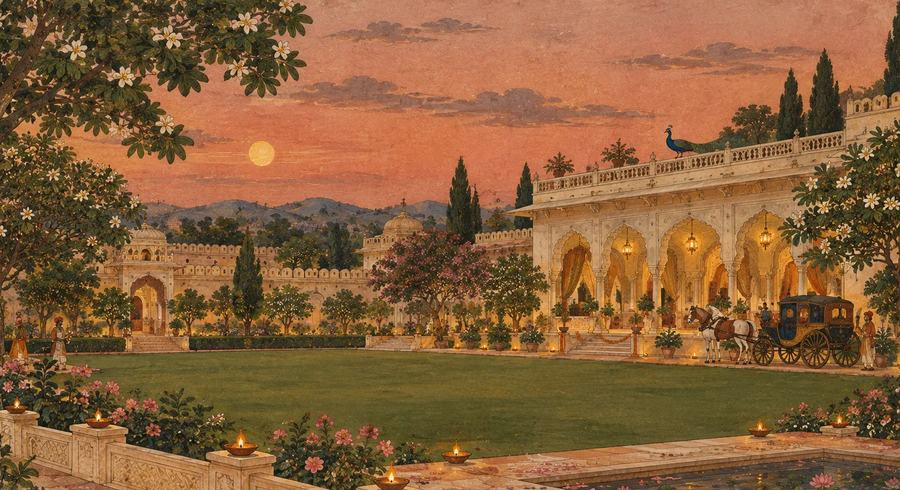
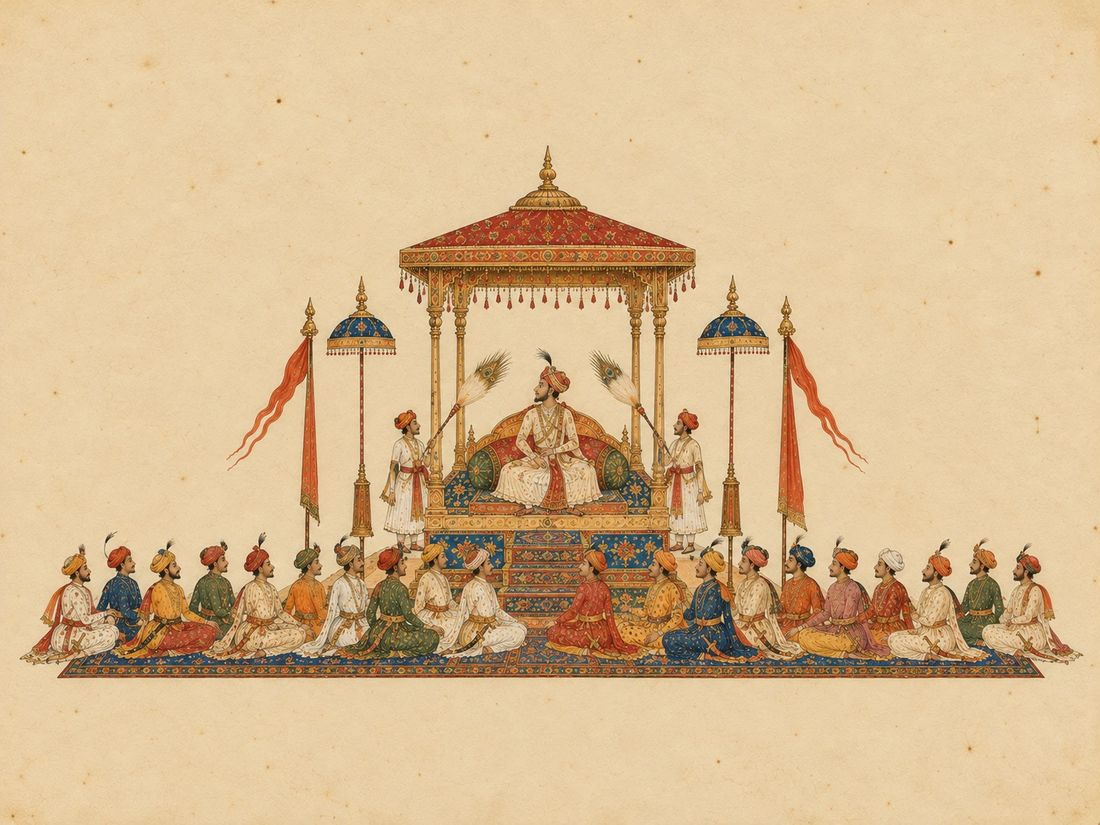
Where published accounts and family records disagree on a date, this page follows the House of Diggi’s own history. Spellings of names follow the book’s English edition. The paintings on this page are made in the manner of Rajput miniatures to illustrate the story; they are not portraits or records of actual scenes.


 The Solar Line
 Kachchhapaghata
 Tenth century
 Twelfth century
 Kakil
 1503 – 1527
 29 Nov 1727